8 min read
The process of building an content foundation
When it comes to content creation, there are a million ways to approach it. You can chase trends, post daily, run ads, hire creators everything. But the more brands I work with, the more I keep coming back to the same idea:
Build the foundation before you drive traffic.
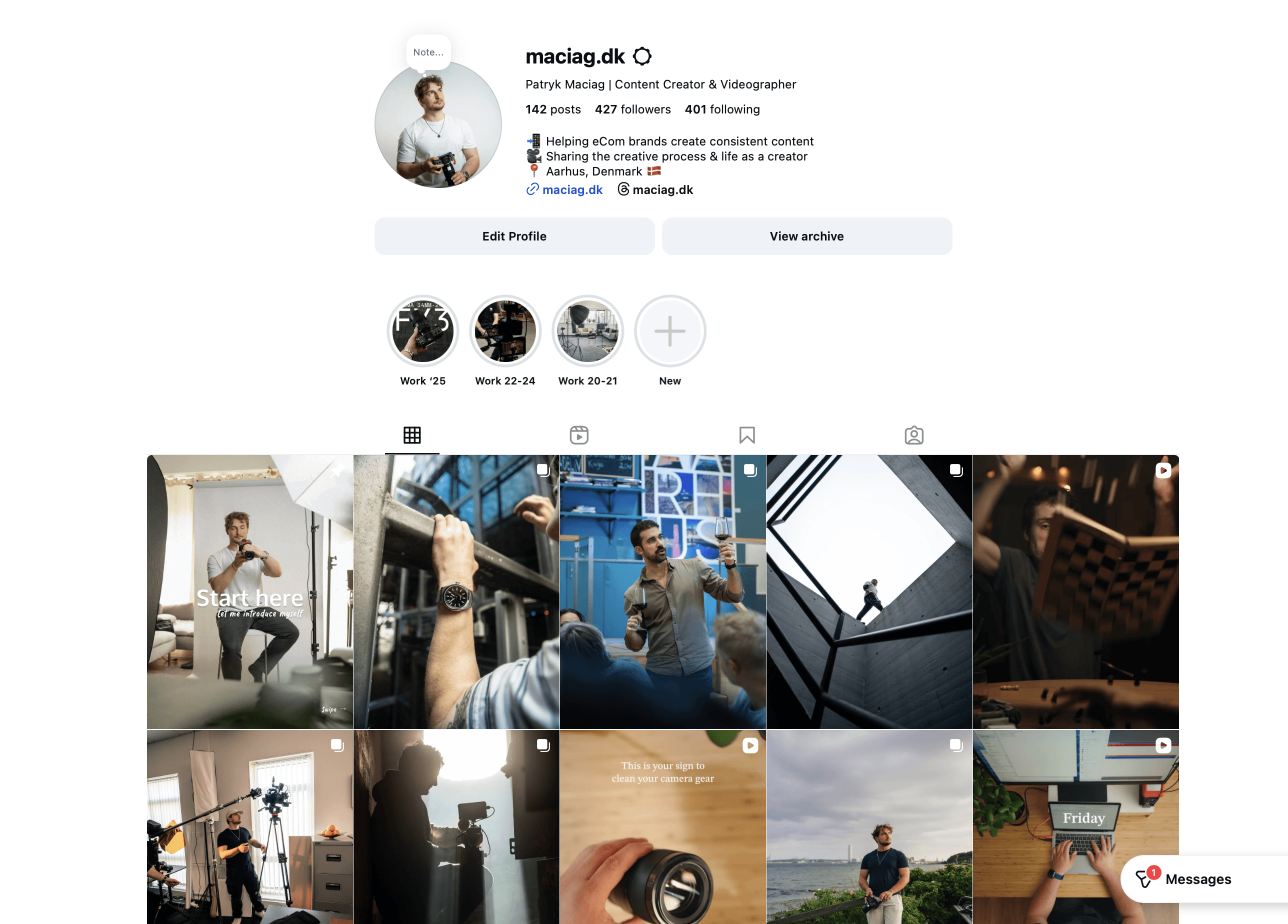
Because when someone discovers you through a Reel or an ad, they don’t just watch the video and move on. They click your profile. And your social profile especially on Instagram works the same way a landing page does. It’s the place people go to understand who you are, whether they trust you, and whether your product is worth their attention.
A strong landing page answers a few simple questions: who are we, why should I trust you, what do you sell, how do you deliver value, and what should I do next. The exact same logic applies to a social profile. That’s why I believe brands should stop thinking about single posts and start thinking about “foundation assets” content that sets up the story and makes everything else convert better.
My favorite way to structure this is through a pinned setup and story highlights. It’s the closest thing Instagram has to a homepage.
The first foundation asset I always come back to is a “Start Here” piece. People remember stories more than features. A strong brand narrative can do more for trust and connection than any product post. You don’t need a huge cinematic brand film for this to work, either. A simple storytelling format is enough something that shows where the brand came from, what problem it solves, and what makes it different. The important part is that the story has contrast. A good story needs tension: a struggle, a conflict, a challenge, something real. When you show the obstacles or the turning point behind the brand, the viewer gets emotionally pulled in. And when budget allows and the narrative is clear, a video version of this is often even more powerful than a carousel.
Once the narrative is in place, the next foundation is product content but not random product posts. Content that helps people understand what you sell and why they should care. For e-commerce brands, Instagram Stories are especially important here, because Stories are one of the few places where you can actually send people directly to an external link. That makes Stories one of the best conversion tools on the platform. I like to treat Stories like a mini product catalog: let people tap through options, see variations, and choose what interests them before they ever land on the website. To support that, simple carousels work well too clean flatlays, close-ups, and a model wearing the piece if it’s clothing. The goal isn’t to “show product.” The goal is to reduce uncertainty.
Then there’s the content that builds trust without trying to sell at all: behind-the-brand content. This can show up in a lot of ways, but for clothing brands there’s almost always value in showing behind the collection what inspired it, how it was made, the craftsmanship, the details people normally don’t see. A simple fly-on-the-wall interview with a designer can do a lot, especially when paired with footage from the real process: sketches, materials, fittings, production, packaging. And if that feels too big, even founder and team content works: packing orders, quality checks, shipping days. It makes the brand feel real. It signals effort. It creates a human connection.
Social proof is the next layer. This is where a brand goes from “nice content” to credibility. Social proof can be created through UGC, testimonials, reviews, customer stories, “featured in” mentions, or even mini-documentary style content about the people using the product. But one of the simplest systems is also one of the most effective: when customers tag your brand in Stories, repost it and save it into a Highlight. Give it a simple title like “You,” “Fans,” “Reviews,” or “Wearing.” It’s low effort, but it makes trust visible. And if you want a more organic, native format, something like an on-the-street interview can work too asking people about your product or letting real reactions carry the content.
The last foundation element I like to include is offer content, content that pushes conversion directly. This is the part most brands either avoid completely, or overdo until the whole page feels like ads. The trick is balance. A good rule of thumb is to post offer content every 14–20 posts, so your profile doesn’t become a constant sales feed. Offer content is valuable because it turns social into something measurable, but it only works if it’s not constant. And it should rotate. If the offer never changes, it stops feeling like a deal and becomes the baseline price. That’s why rotating offers based on season and strategy is often smarter: a small discount, bundle deals, free shipping, gift with purchase, limited drops. A popular strategy right now is also using freebies to collect emails, offering something valuable through ManyChat/DM automation and then following up via email with an offer when the timing is right.
When you put all of this together, the point becomes simple: Instagram gives you pinned posts and highlights for a reason. If you’re using social media as a marketing channel, your profile should be treated like a landing page. Build the foundation first, then send people there.
Because traffic without foundation is wasted attention. But foundation assets turn attention into trust, followers, and conversions.
